United Nations SDG 3
This project was a self-directed publication design brief built around Sustainable Development Goal 3: Good Health and Wellbeing.
Client
Area
Year
Tools
The challenge
Publication design and UX design share similar challenges: how do you guide someone through complex information in a way that keeps them engaged? How can I create something that feels accessible for everyone? How can I leave them with something they didn't know before?
The brief required designing a persuasive information design document of at least 10 pages, within strict constraints:
a maximum of three colours
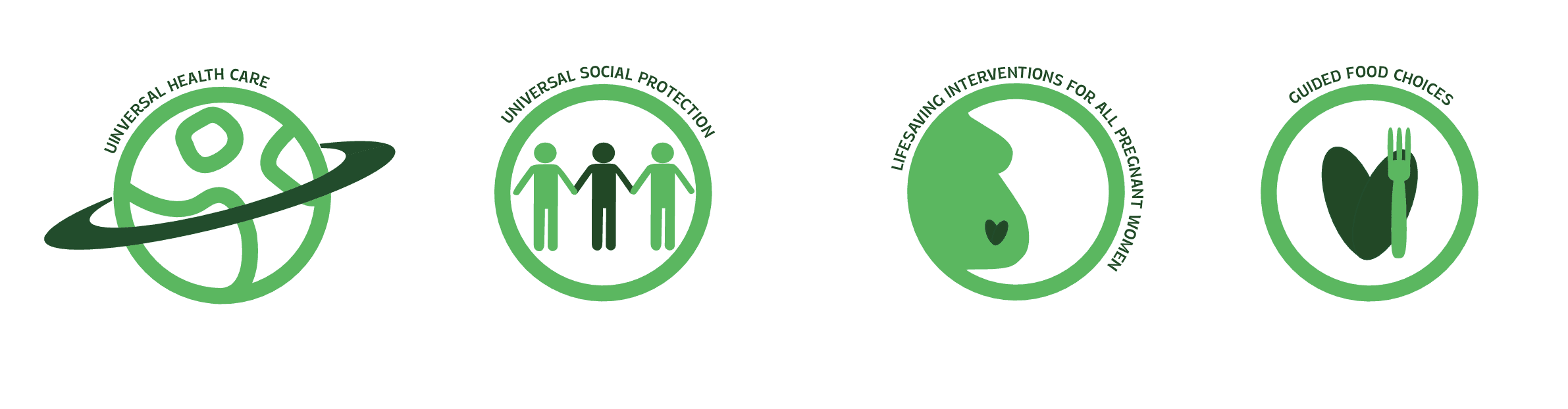
a custom family of four icons
and at least one original data visualisation.
As this topic has a great amount of information that needed to be included in only a few pages, the challenge also involved producing something that was not too overwhelming to read.
Defining the audience
The brief required me to define a specific target audience within a demographic of age 10 and above. Rather than designing for a specialist reader, I chose to design for the general public.
A general audience needs:
Information presented at varying levels of depth, so they can skim or read closely
Numbers made tangible, not just listed
Visual cues that tell them where to look and in what order
A clear narrative arc
Research & narrative
This task required the use of original text from the official UN documents, without paraphrasing. I aimed to still build a narrative for the reader.
The publication opens with the current state of global health since Covid, moves through specific issue areas (drug use, disease, child mortality, etc.), demonstrates the gap between current progress and the 2030 targets, and ends with what achieving those targets would actually require.
This is a reader journey of building awareness, creating emotional stakes, then offering a way forward.
Layout design
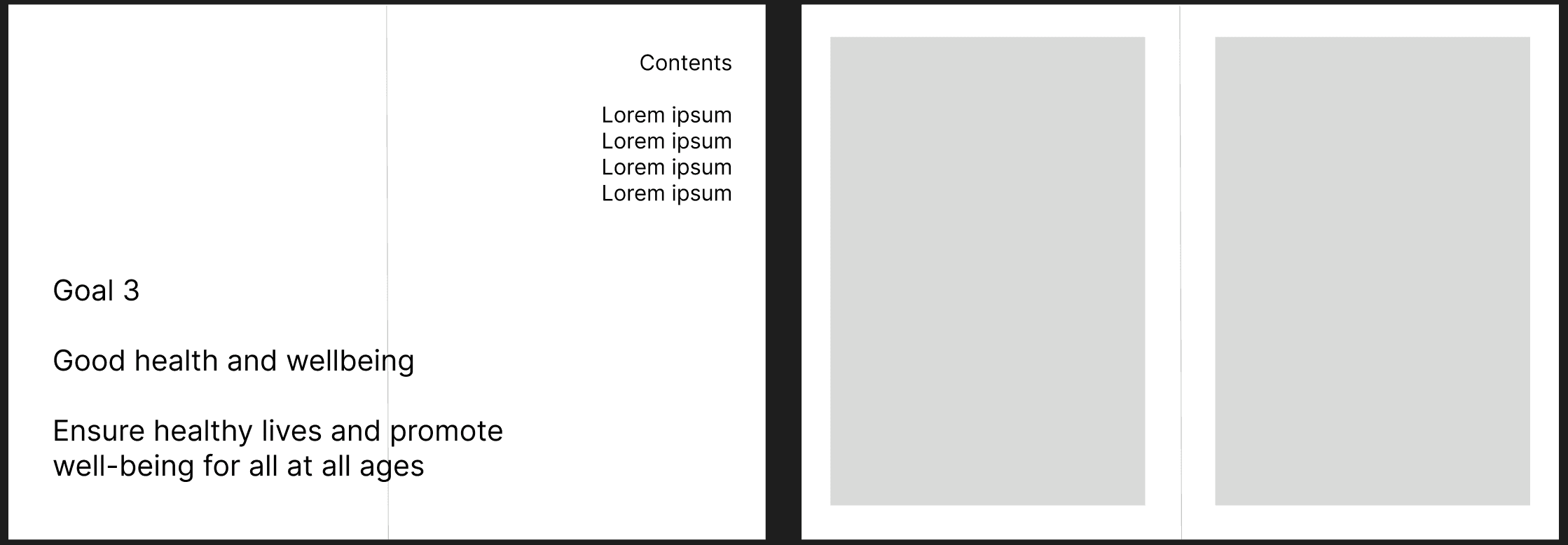
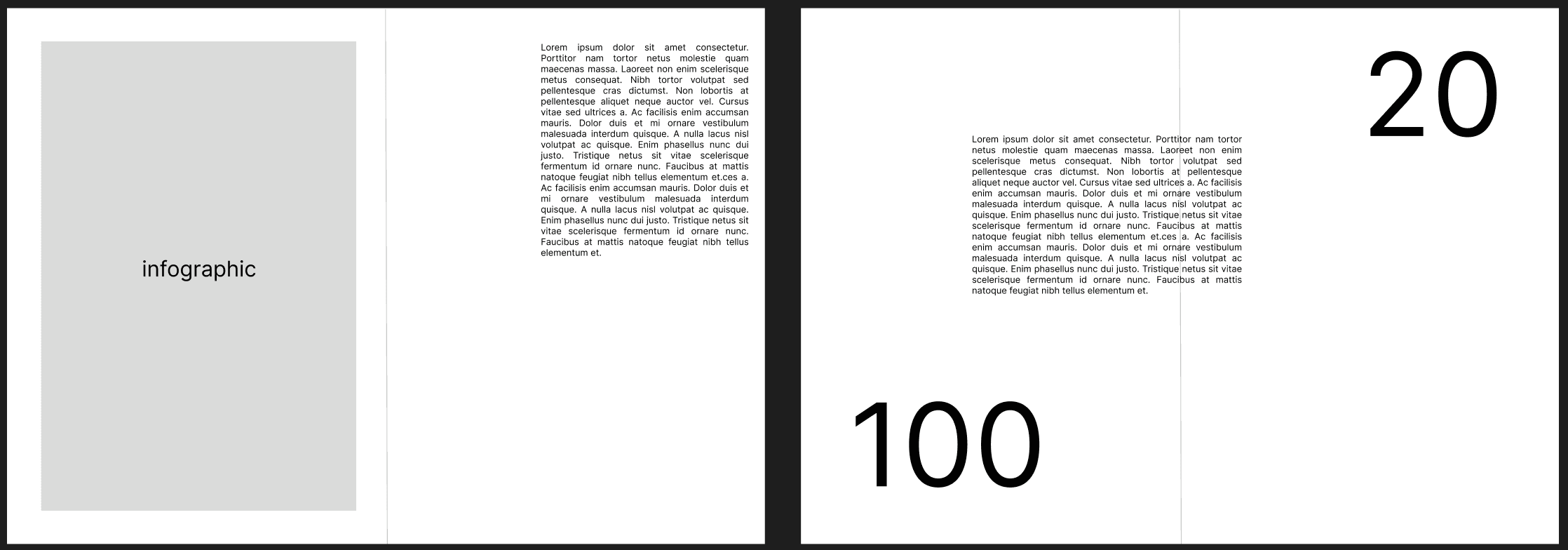
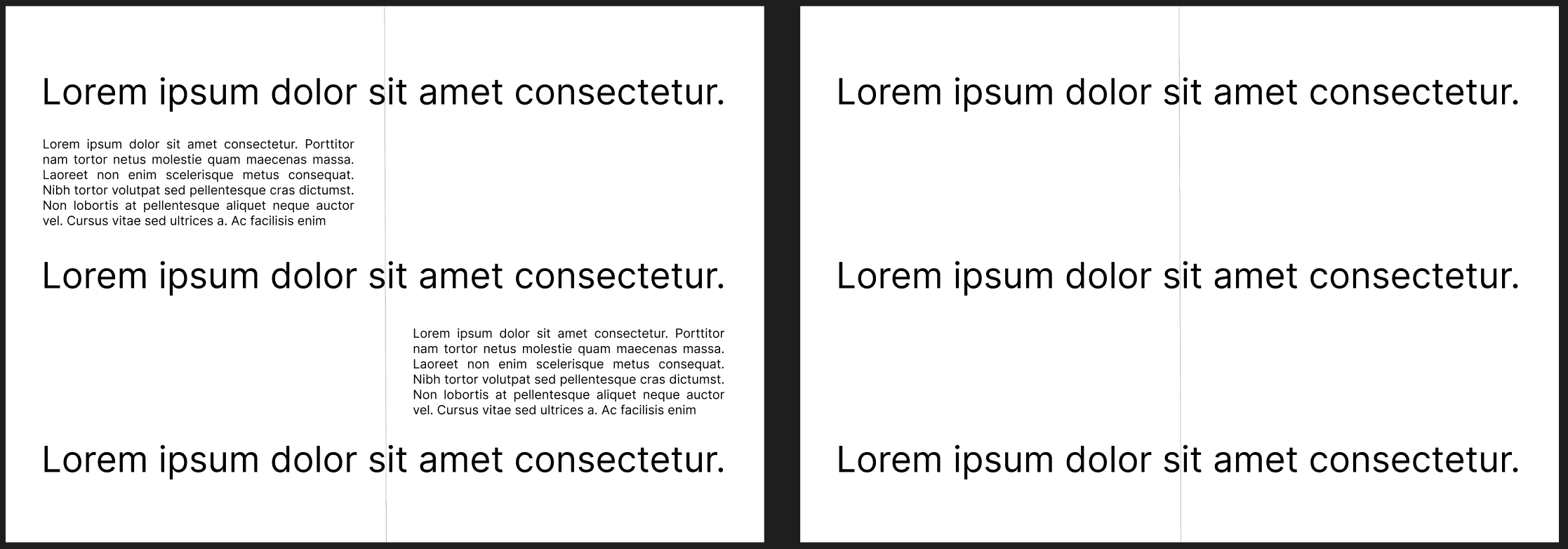
The wireframing phase helped me establish the range of layout types the publication would use before committing to visual style.
Large number spreads
For single statistics that needed emotional weight where the number itself becomes the graphic.
Text-led spreads
Using typographic scale to create hierarchy without imagery.
Data visualisation spreads
Where the graphic carries the most information and draws attention.
Full-bleed image spreads
Section transitions and breathing space for the readers
Visual system
Colour palette
I chose the green from the UN's official SDG 3 colour, paired with white and a near-black. I chose these colours to maintain the visual language from the original branding. The green is used to show important information, while white space dominates many sections to maintain readability and calm.
Photography
All photography was taken by me, at the UN in Geneva. I edited them with a green duotone overlay, to create visual cohesion.
Typography
A bold typeface carries the headlines and large-scale numbers for visual impact. Body text uses a simple, readable typeface. The combination creates clear hierarchy, where a reader scanning the page can first see the key message from the display type alone, then go deeper into the body text.
Data visualisation & icons
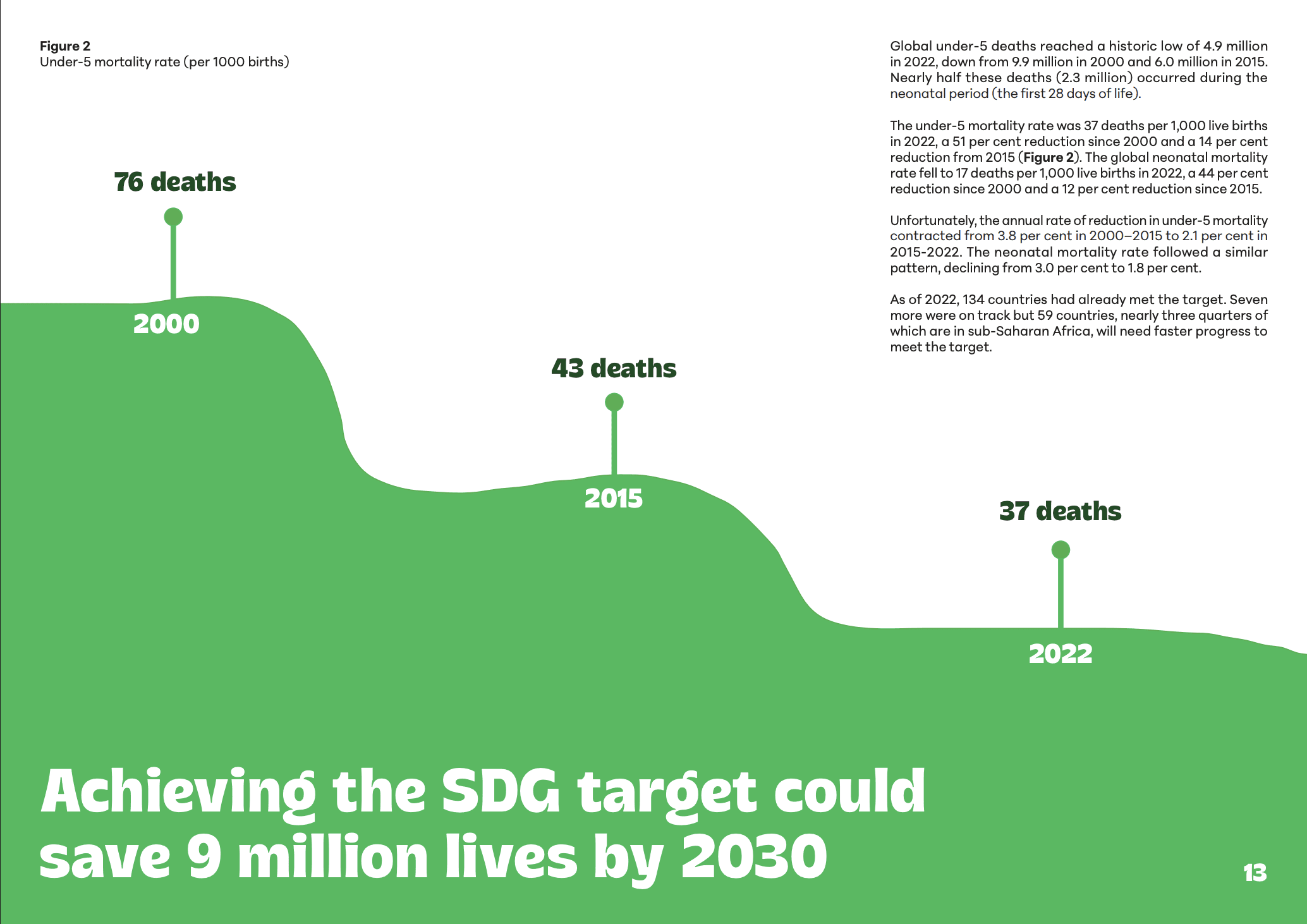
Data visualisation: As per the brief, I created 2 different graphics in Illustrator to visualise select data.
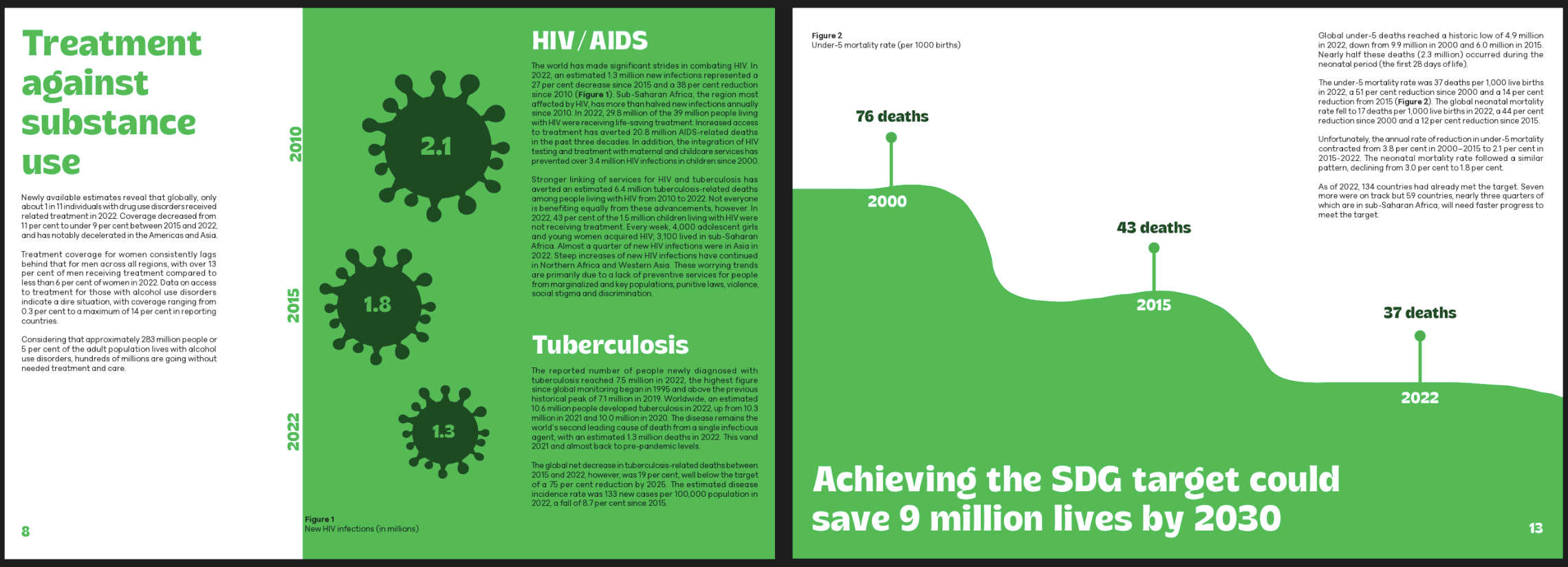
Icons: I designed a family of four icons representing the pathways to achieving SDG 3. They are connected visually with the framing circle.
Iteration & critique
I was able to present my work in progress to both my peers and lecturer to receive structured feedback. This meant I was able to adjust small details accordingly such as creating longer 'stems' on Figure 2. I believe an iterative and feedback-driven process is fundamental to good design practice.
Reflections
This project significantly grew my interest for publication and information design. I enjoy the connection to UX design in the sense that the user journey is a very a crucial consideration when designing.
Designing to gain and hold attention was a great challenge and learning experience.